Is FemiCore a Health Supplement? What Its Legal Status Means for You
Is FemiCore a health supplement or a drug? How the FDA classifies it, what is and is not reviewed before sale, GMP rules and how to read the label.
- Author
- Strong Health Tips Editorial Team
- Published
- Reading time
- 8 min read
Affiliate disclosure: this review contains links to the official FemiCore website. If you buy through them we may earn a commission at no extra cost to you. It does not change our assessment. Details.
People often ask is FemiCore a health supplement, and the question usually hides a second one: how much should I trust what the label says? The short answer is yes. FemiCore is sold as a dietary supplement, not as a medicine. That legal category shapes everything about it, from what the company is allowed to claim to what the FDA does and does not check before the bottle reaches your door.
This guide explains what that status means in practice. It is not about whether FemiCore works for bladder urgency (our FemiCore reviews covers the evidence) or which package to pick. It is about reading a supplement the way a pharmacist would, so your expectations match what the product legally is.
In one line
FemiCore is a dietary supplement: a daily capsule with botanicals and probiotics, sold with a 60-day money-back guarantee.
One-time purchase from the official website, from $49 per bottle.
See the official FemiCore label and packagesIs FemiCore a health supplement? Yes, and here is what that means
In the United States, a dietary supplement is a product taken by mouth that contains a “dietary ingredient” such as a vitamin, mineral, herb or other botanical, amino acid, or live bacteria, and is labelled as a supplement. FemiCore fits that description exactly: each capsule contains four botanicals (Mimosa Pudica, Bearberry, Cranberry and Berberine) and five Lactobacillus strains, and the bottle carries a Supplement Facts panel.
That puts it in the same legal bucket as a multivitamin or a fish oil capsule. It does not put it in the same bucket as an overactive bladder medicine from your doctor. The two are regulated in very different ways, and the differences are worth knowing before you spend money on either.
Dietary supplement vs drug: the key differences
| Question | Prescription or OTC drug | Dietary supplement (like FemiCore) |
|---|---|---|
| FDA approval before sale? | Yes | No |
| Must prove it works before sale? | Yes, through clinical trials | No |
| Can claim to treat a disease? | Yes, for its approved use | No |
| Made under GMP rules? | Yes | Yes |
| Label panel | “Drug Facts” (OTC) or prescribing information | “Supplement Facts” |
The most important row is the second one. A drug for urgency has to show, in controlled trials, that it reduces symptoms more than a placebo. A supplement does not. The maker is responsible for safety and for not making false claims, but nobody checks the evidence for effectiveness before it goes on sale. The FDA steps in after a product is on the market if it turns out to be unsafe, contaminated or mislabelled.
This is why the honest way to evaluate FemiCore is ingredient by ingredient, as we did in our FemiCore ingredients list breakdown. There is no product trial to read, only research on the individual components.
What the FDA does and does not review
It helps to separate the things the FDA is involved in from the things it is not.
What the FDA does:
- Sets the rules for how supplements must be made (current Good Manufacturing Practice).
- Sets labelling rules, including the Supplement Facts panel and the required disclaimer.
- Can inspect manufacturing facilities.
- Can act against unsafe, contaminated or misbranded products once they are sold, including warning letters and recalls.
What the FDA does not do:
- Approve supplements before they are sold.
- Test each product to confirm it contains what the label says.
- Confirm that a supplement works.
So when a website says a supplement is “FDA approved”, treat it as a red flag. Facility registration with the FDA, where a brand claims it, is a statement about the factory being registered. It is not an approval of the product, and any page that turns it into one is overselling.
Buy it the safe way
Only the official website carries the 60-day money-back guarantee.
BuyGoods checkout, one-time payment, free US shipping on 3 and 6 bottles.
Check FemiCore on the official websiteGMP: what the manufacturing claim actually guarantees
The official FemiCore site displays seals for “GMP Certified”, “Manufactured in USA with imported ingredients” and “Made in an FDA registered facility”. It does not name the facility or the certifier, so you cannot check the claim yourself. What GMP means in general: under the FDA’s dietary supplement CGMP rules, manufacturers have to:
- Confirm the identity of the ingredients they use.
- Keep equipment and facilities clean and controlled.
- Follow written procedures and keep batch records.
- Test finished products against their own specifications.
- Handle complaints and keep records that allow a batch to be traced.
That is genuinely useful. It reduces the risk of contamination and batch-to-batch inconsistency, which are real problems with some cheap online supplements. What GMP does not do is tell you anything about whether the formula improves bladder control. It is a quality standard for the process, not a stamp on the outcome.
How to read a supplement label like FemiCore’s
When your bottle arrives, take two minutes to read it. These are the parts that matter:
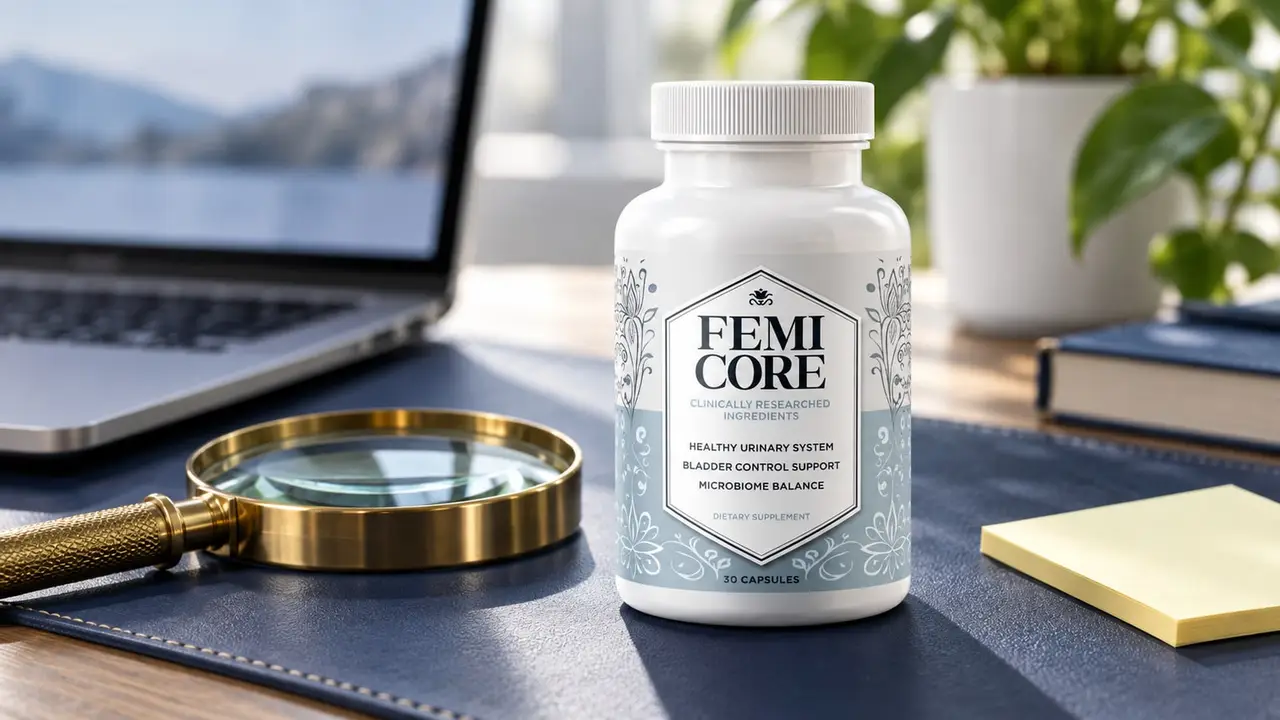
- Serving size. For FemiCore it is one capsule. Each bottle holds 30 capsules, so one bottle is a month’s supply.
- Proprietary blend. FemiCore lists its nine ingredients as a blend without individual amounts. This is legal, but it means you cannot compare doses with the doses used in studies. It is the main transparency limitation of the product.
- The FDA disclaimer. Any supplement making a structure or function claim, such as “supports bladder control”, must say the statement has not been evaluated by the FDA and that the product is not intended to diagnose, treat, cure or prevent any disease. Its presence is normal. Its absence on a bottle making health claims would be a problem.
- Manufacturer or distributor. The label must name who makes or distributes the product. Note it in case you ever need to report a problem.
- Expiry date and lot number. Check both on arrival. A missing date, a smudged lot number or a broken seal are reasons not to take it and to contact support, using the details in your order confirmation email.
What supplement status should mean for your expectations
Knowing that FemiCore is a supplement should shape three expectations.
Effects are supportive, not curative. FemiCore is marketed to support bladder control and a healthy urinary microbiome. It cannot legally claim to treat overactive bladder or incontinence, and you should not expect it to act like a prescription drug. If it helps, the change is likely to be gradual over 8 to 12 weeks.
The evidence is indirect. Some ingredients, notably cranberry and Lactobacillus crispatus, have human research for urinary health. The product itself has not been through a clinical trial. That is common for supplements but worth being clear-eyed about.
Your safety checks are your responsibility. Because nobody screens supplements for interactions before sale, it is up to you to check. Berberine can affect blood sugar and interacts with liver enzymes that process many medications, and bearberry is traditionally limited to short courses and avoided in kidney disease. Our FemiCore side effects guide goes through each ingredient. If you take any regular prescription, show the ingredient list to a pharmacist before starting.
Where a supplement fits next to medical care
A supplement is a reasonable thing to try for everyday urgency and night-time trips, but it is not a replacement for assessment when something new or worrying happens. See a doctor rather than self-treating if you notice blood in your urine, burning or pain, fever or back pain, or sudden new incontinence. Those can point to infection or other problems that need proper diagnosis.
For ordinary symptoms, the most effective first steps are free: bladder training, pelvic-floor exercises, moving caffeine before noon and timing fluids so most is drunk earlier in the day. Good sleep habits also reduce night-time trips. FemiCore can sit alongside those habits, not in place of them.
Low-risk trial
Try it for 60 days. If it does not help, return all bottles for a refund.
The guarantee covers every package bought on the official website.
Start with the official FemiCore offerThe bottom line on FemiCore’s status
So, is FemiCore a health supplement? Yes, and that tells you how to read it. As a supplement it must follow GMP rules, it is sold with a clear refund policy, and it is built from ingredients with some genuine research behind them. It is not FDA approved, not proven as a finished product, and not allowed to claim it treats any condition. Treat it as a supportive daily capsule, check the label and your medications, give it 8 to 12 weeks, and use the guarantee if it does not earn its place.
For a quick overview of the formula, packages and guarantee on one screen, see the FemiCore product page.
Official website only
Genuine FemiCore from the official website, with a 60-day money-back guarantee.
From $49 per bottle. One capsule a day, 30 capsules per bottle.
Visit the official FemiCore websiteQuestions people ask
Is FemiCore a health supplement or a medicine?
FemiCore is a dietary supplement. It is sold as a once-daily capsule with botanical extracts and Lactobacillus probiotics, labelled with a Supplement Facts panel. It is not a prescription or over-the-counter drug and is not intended to diagnose, treat, cure or prevent any disease.
Is FemiCore FDA approved?
No. The FDA does not approve dietary supplements before they are sold, so no supplement, including FemiCore, is FDA approved. Even when a brand says its factory is FDA-registered, that is a statement about the factory, not an approval of the product.
Does the FDA check that FemiCore works?
No. Under US law, supplement makers are responsible for making sure their products are safe and their claims are truthful, but they do not have to show the FDA evidence that a product works before selling it. The FDA can act against a supplement after it is on the market if it is unsafe or mislabelled.
What does GMP mean on a supplement like FemiCore?
GMP stands for Good Manufacturing Practice. FDA rules require supplement makers to follow current GMP, which covers things like ingredient identity testing, cleanliness, record keeping and batch consistency. GMP is about how a product is made. It does not mean the product has been shown to be effective.
Why does FemiCore have a disclaimer on its label?
Any supplement that makes a structure or function claim, such as supporting bladder control, must carry a standard statement saying the claim has not been evaluated by the FDA and that the product is not intended to diagnose, treat, cure or prevent any disease. It is a legal requirement, not a warning sign by itself.
Should I see a doctor instead of taking FemiCore?
If you have pain, burning, blood in your urine, fever or sudden new incontinence, see a doctor first, because those symptoms need medical assessment. For everyday urgency and leaks, a supplement can sit alongside proven habits like bladder training and pelvic-floor exercises, ideally after checking with a pharmacist if you take medication.
Sources
Not medical advice. This guide is general information and does not replace a consultation with a qualified healthcare professional who knows your history. Full disclaimer.
Written by
Strong Health Tips Editorial Team
We research, write and fact-check every guide against current guidance from major health bodies and peer-reviewed studies, then rewrite it in plain English. How we work.