NerveCalm Ingredients: Marshmallow Root, Corydalis, Passion Flower and Poppy
NerveCalm ingredients: the bottle photo names marshmallow root, corydalis, passion flower and California poppy. No amounts are printed online. Notes inside.
- Author
- Strong Health Tips Editorial Team
- Published
- Updated
- Reading time
- 8 min read
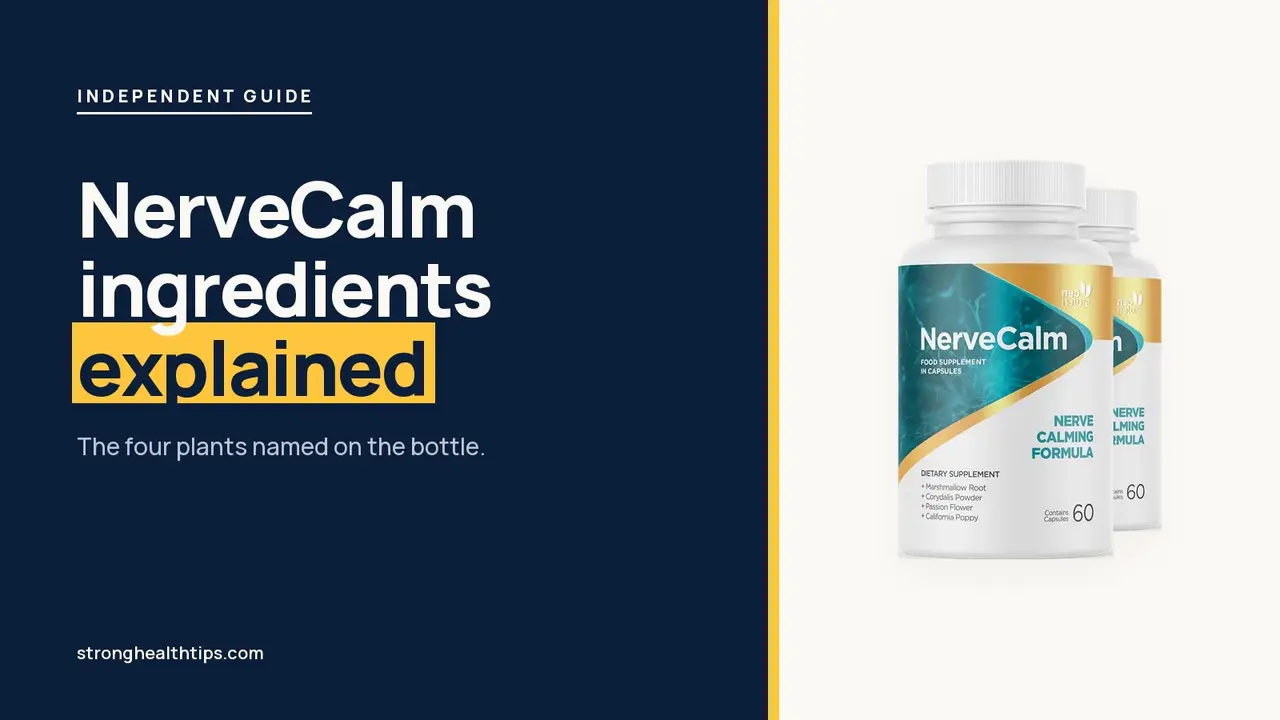
Anyone comparing NerveCalm with other products will want the ingredients first. NerveCalm, also searched as Nerve Calm, is a two-capsule daily formula, and its bottle photo names four plants. This page sets those four out, describes the kind of plant each one is in plain terms and explains why the seller’s online pages leave the amounts out. It closes with the drowsiness note and the questions worth bringing to a doctor.
The four plants
Four named plants, read straight from the bottle photo.
Each one is described below in plain words.
See the plants on the order pageNerveCalm ingredients: the four names on the bottle
Nothing in this guide goes beyond the four names printed on the bottle photo. The table pairs each name with a short description of the plant it comes from. Treat those descriptions as our general notes, not as a claim about what a plant does once it is inside a capsule.
| Name on the bottle photo | Plain description (ours) |
|---|---|
| California poppy | A flowering plant of the poppy family. |
| Marshmallow root | The root of a flowering plant. |
| Passion flower | A climbing flowering plant. |
| Corydalis, printed as Corydalis Powder | A flowering plant, used here as a powder. |
No single name is given a job in this guide. We do not present one plant as the reason for an effect, and the seller’s online pages do not do that either. Read the names as an inventory of what the bottle holds.
Why amounts are not on this page
The seller’s online pages do not print the quantity of each plant in a capsule. This guide therefore includes no amounts, no percentages and no serving sizes. A figure found on a different site should be checked against the label on your own bottle, because the label is where that bottle’s details are shown.
A missing amount raises the value of the label. Read it before you open the bottle, and take it along when you talk through the mix with your doctor or pharmacist. The four names give you a starting point for that talk. They are not a dose.
Checking the label one line at a time
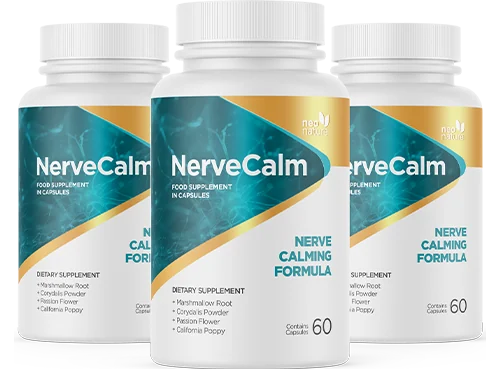
Start with the front. The bottle should read NerveCalm, carry the words Nerve Calming Formula, say Food supplement in capsules and count 60 capsules. Then turn it over and match the four plant names against the table. If any name differs from this list, set the bottle aside and contact the seller through the confirmation for the order you placed before you start a routine.
The directions come next. The printed wording asks for two capsules daily, taken with food and water early in the day. A 60-capsule bottle lasts thirty days at that pace, which is why one bottle is described as a month’s supply.
Lowest price per bottle
Six bottles bring each one to $49.
$294 in total, shipping free on that order.
Take the six-bottle priceA note on the bottle photos
The four names are printed small on our bottle photos, so zoom in before you rely on them. If a picture is hard to read on your screen, use the label on the bottle itself as the reference. The label is the version you will hold, and it is the one to compare line by line.
How plant names appear on supplement labels
Plant names on supplements are often given in one of two forms: a common name used in everyday language, or a botanical name that identifies the species. A bottle may use either form, and sometimes both. Compare the spelling on your label with the spelling in this guide. If a word looks different, treat it as the same plant only after you have checked the bottle itself. Small differences in wording are a reason to ask, not a reason to guess.
Allergies and plant families
If you have had a reaction to a plant from the same family as one of these four, tell your doctor before the first capsule. Plant families group species that share features, and a sensitivity to one member can sometimes extend to its relatives. Your doctor can weigh whether that matters for you, and a pharmacist can help you read the label for any name you do not recognise.
Why the table lists names, not doses
A table of names is a map of the bottle, not a dosing chart. It tells you what the bottle says it contains, but it cannot tell you how much of any name goes into a capsule, and it cannot explain how the four work together. Those questions are beyond what this page can answer, so a doctor or pharmacist is the right person to ask. Read the table as a checklist for the label, nothing more, and keep the table and the label together when you talk with a clinician.
Put the photo and this table side by side. The names should line up with what you see, and the order in the table is not a ranking of any kind. A mismatch in spelling is worth a question, even when the plant itself is the same one. We listed them so that every reader can check the same four without hunting through a long page.
Drowsiness and other medicines
Two of the four plants can add to drowsiness and can interact with sedatives, sleep aids and some other medicines. That note is ours and applies to the bottle as a whole. Do not drive or run machinery until you understand how the capsules affect you.
If you already take a medicine that makes you sleepy, talk to your doctor or pharmacist before the first capsule. Ask how the timing should work around that medicine, and continue prescribed medicine on the schedule your doctor gave you while the conversation is under way.
Pregnancy, medical conditions and who should wait
Pregnant or breastfeeding readers should ask a doctor before taking any capsule from this bottle. So should anyone managing an ongoing condition or an allergy to a plant. The product is for adults. Keep the bottle out of reach of children, ideally high up or behind a lock.
Questions to bring to the appointment
Write your questions down before the visit, so none slip away mid-conversation. The ones most worth raising are these:
- Given my current prescriptions, do these four plants suit me?
- How should the 30-minute gap around my own medicines work?
- Which symptoms should prompt a call to a doctor straight away?
- Does pregnancy, breastfeeding or planned surgery change the answer?
Take the bottle and your written medicine list, and read the four names aloud from the label so nothing gets misheard.
Ask first
Take the label and your medicine list to a doctor.
Timing matters here: two plants on this list may add to drowsiness.
Read the bottle, then orderWhat the ingredient list does and does not promise
The bottle names four plants and describes a daily routine. It does not promise a particular result, and this guide does not promise one either. The seller’s stated aim is nerve health and comfort, and we repeat that aim without embellishment.
Store the bottle somewhere dry, out of reach of children. A label you can read at a glance remains the best reference you own, and it sits beside the table on this page.
What to do when a name is missing
If a plant name on your bottle does not appear in this guide, stop and check again before you assume anything. The four names here come from the bottle photo, so a mismatch can mean a photo that does not match your bottle, a printing difference or a bottle that is not the one described. In each case the right move is the same: contact the seller in writing and describe what you see. Do not start a routine until the question is settled.
Reading the photo, the label and this page together
Three sources should agree: the photo, the label and this page. The photo is the reference we use, the label is what you hold, and this page explains the reference in plain words. When all three point to the same four names, you have a good match. When they do not, the label is the one to trust for your own bottle, and the seller is the one to ask.
Where the ingredient details fit in our guides
The overview of the product gathers the packages and the reading order in one spot. The catalog’s ingredient entry repeats the four names in a compact layout. Safety notes sit in the caution write-up, and daily timing is covered in the directions write-up.
Before you start, speak with your doctor, keep prescribed medicine on schedule and check the four names against your label. Those steps matter more than any single line in this guide.
Pick your count
Two, three or six bottles, each on its own row.
The $79, $69 and $49 bottle prices sit on separate rows.
Compare the bottle countsQuestions people ask
What are the NerveCalm ingredients?
The bottle photo names four plants: marshmallow root, corydalis (printed as Corydalis Powder on the bottle), passion flower and California poppy.
How much of each ingredient is in a capsule?
No amounts are printed on the seller's online pages, so this guide gives none. Check the label on the bottle you receive, and ask your pharmacist if you need more detail.
Are the plants in NerveCalm drowsy-making?
Two of the four plants can add to drowsiness. Do not drive until you know how the capsules affect you, and ask your doctor or pharmacist about timing.
Can I take NerveCalm with other medicines?
Ask your doctor or pharmacist first. Two of the plants can interact with sedatives, sleep aids and some other medicines, so keep prescribed medicine as directed while you check.
What do the directions say?
The seller's directions are two capsules a day with a meal and a glass of water, first thing in the morning. A 60-capsule bottle covers a month at that rate.
Is NerveCalm suitable during pregnancy?
Pregnant or nursing readers should ask a doctor first, before any capsule is taken.
Not medical advice. This guide is general information and does not replace a consultation with a qualified healthcare professional who knows your history. Full disclaimer.
Written by
Strong Health Tips Editorial Team
We research, write and fact-check every guide against current guidance from major health bodies and peer-reviewed studies, then rewrite it in plain English. How we work.