NerveCalm How to Take: Two Capsules a Day With a Meal
NerveCalm how to take: the seller's directions are two capsules a day with a meal and a glass of water. See the medicine timing note and who asks first.
- Author
- Strong Health Tips Editorial Team
- Published
- Updated
- Reading time
- 8 min read
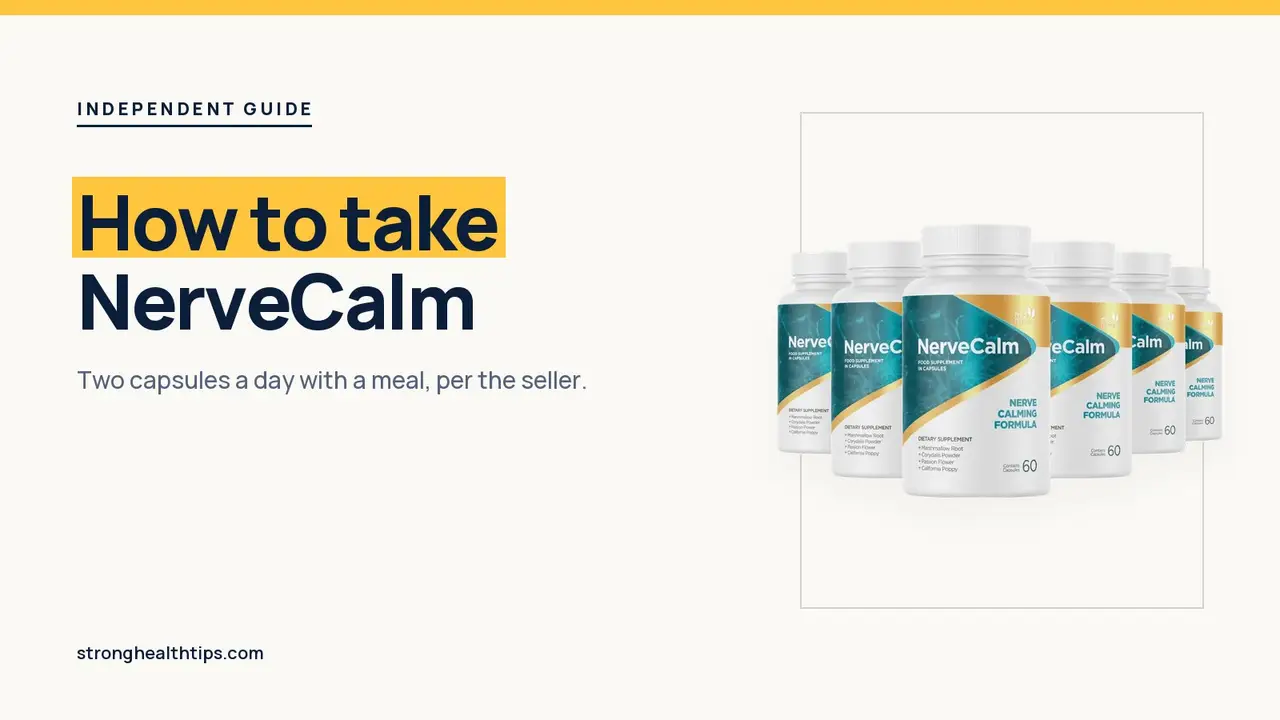
Directions tend to be the first thing a new bottle raises, so this page starts there. NerveCalm, searched online as Nerve Calm, is taken as two capsules each day. The seller ties that dose to food and water, and the rest of this guide follows the routine step by step: how long a bottle lasts, how the seller’s timing around medicines works, which readers should speak with a doctor before starting and what the warning signs look like.
Two a day
Take two capsules with food, as the seller directs.
Each 60-capsule bottle covers a month at that rate.
Begin the two-capsule planHow to take NerveCalm, as the seller describes it
The seller describes the routine in one line: two capsules daily, swallowed with food and water, and taken first thing in the morning. The meal is part of that description, so the capsules belong with food rather than on an empty stomach.
Your bottle’s own label outranks anything you read online. Compare the printed directions with the seller’s wording, and if the two disagree, put the question to the seller in writing before the first capsule. Keep the bottle in view while you read, so you are checking the real text rather than your memory of it.
How long a bottle lasts
Sixty capsules fill a bottle, and at two daily that works out to thirty days, which the seller also calls 30 doses. Three bottles therefore cover about three months, and six cover six months at the same dose. Those figures come straight from the arithmetic of the dose, so they describe the supply rather than how an individual responds.
The seller suggests 4 to 6 months of use, and we pass that on as the seller’s suggestion. How long a course should run for you is a question for your doctor, who can weigh it against your health history and every medicine you take.
Timing the capsules around your medicines
The seller’s timing rule is a 30-minute window on either side of your own medicines. In practice that means reading the times on your medicine labels, then placing the capsules outside the window. A quick look at your own timetable is usually enough to show where the gaps fall.
Keep prescribed medicine on the timetable your doctor set, and never adjust a dose because of a supplement. If one of your medicines makes the gap hard to manage, ask your pharmacist for a plan that fits, since they can review every item on your list together.
Who should speak with a doctor first
Pregnant and nursing readers should ask first. So should anyone on prescription medicine, anyone living with a medical condition or an allergy to an ingredient, and anyone scheduled for surgery. Bring the bottle, or a clear photo of its label, and a written list of your medicines so the conversation covers everything at once.
Two of the four plants on the bottle can add to drowsiness and may interact with sedatives, sleep aids and some other medicines. If a dose leaves you feeling sleepy, avoid driving until you understand how the capsules affect you, and mention the timing to your doctor at the next opportunity.
Good to know
- Pregnancy, nursing, prescription medicine and any ongoing condition all call for a doctor’s view before the first capsule.
- The bottle is for adults and should be stored where children cannot reach it.
Counting in bottles rather than days
Counting bottles is simpler than counting days. One bottle answers the month question, and each further bottle adds roughly thirty days at the same dose. Let the number of bottles you order set the length of the supply, rather than a date you carry in your head. A quick glance at the bottle count is often the fastest way to check how much supply is on hand, and the count on the label and the count on the order should agree. If they do not, ask before you start. If the supply and your plans ever stop matching, that is a conversation for your doctor, who knows what the directions mean for your own case.
Reading the dose against the bottle
Each capsule is one unit of the daily dose, so the sixty inside a bottle describe how long it lasts, not how strong each capsule is. That distinction is worth remembering, because the seller’s online pages do not print strength, and nothing on this page should be read as a strength figure. The label on the bottle is the place to check the printed wording, and a pharmacist is the right person to talk through what that wording means for you.
Reading a supplement label for timing details
Labels carry more than a dose. Look for the count inside the bottle, the directions for daily use, any warnings about medicines or conditions and the product name exactly as it is printed. If a detail is hard to read, do not guess at it. Copy the wording as it appears and take it to your pharmacist, who can explain what the printed words mean in practice and whether they change anything for the medicines you already take.
Questions for your pharmacist about timing
A pharmacist can answer timing questions quickly when you arrive with the right details. Consider asking:
- Which of my current medicines are most sensitive to a change in timing?
- Should the capsules move to a different hour on days when a medicine is taken with food?
- Are any medicines on my list in need of extra spacing?
- Which combinations should I raise with my prescriber before I begin?
A medicine list for timing questions
Write each prescribed medicine on its own line, with the dose and the times you take it. Then add any supplement you plan to take alongside, with the time you intend to take it. A list like that makes timing questions easy to answer at the pharmacy counter or in the clinic, and it saves the back-and-forth that a rushed conversation can produce.
Looking at the bottle after delivery
When the bottle arrives, check that the seal is intact and that the label matches the details in this guide. Read the printed directions in full, not only the headline. Keep the bottle out of the direct reach of children. Then compare the count on the label with the thirty-day figure, since the count is what sets the length of the supply.
Warning signs that need a clinician
New numbness, tingling, a burning sensation, weakness or sudden shifts in how the feet or hands feel are a signal to contact a clinician, not a reason to carry on. Call your doctor’s office promptly, say when the change started and list every product you took that day. A supplement is never the right answer to a warning sign.
Ask first
Bring the label to your next appointment.
Your doctor can review the timing and the drowsiness note with you.
Order once my doctor has reviewed itReading the directions against your own schedule
Before the first bottle arrives, set the seller’s directions beside your own schedule. Note the meal you plan to take the capsules with, then check the times your medicines fall. Adjust the plan only with your doctor’s or pharmacist’s agreement.
The directions do not cover every case, such as a change in medicine or a new diagnosis. Those questions belong to a clinician, and a clinician can answer them with your full history in view.
What each package means for the supply
A month’s supply is one 60-capsule bottle. The two-bottle total of $158, plus $9.99 shipping, covers about two months. Three bottles cost $207 with shipping included, enough for roughly three months. Six bottles cost $294 with shipping included, enough for six months. Daily cost runs roughly $2.63 across two bottles, $2.30 across three and roughly $1.63 across six, reckoning thirty days per bottle.
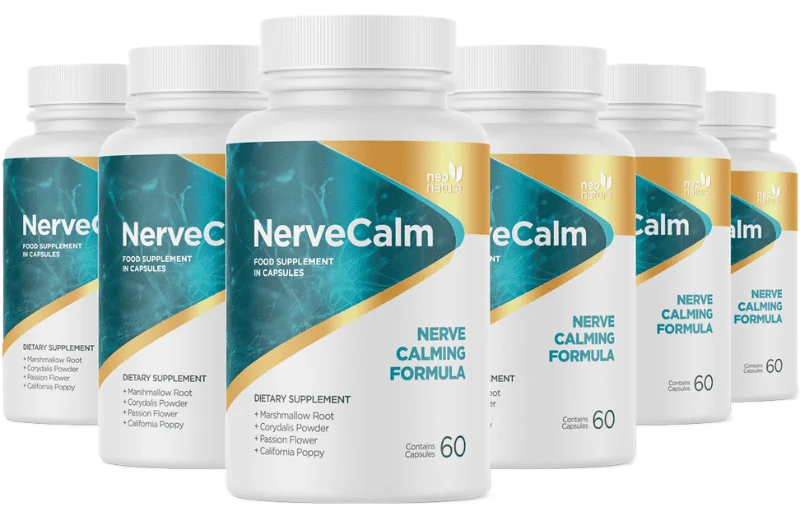
Each package comes with the guarantee. The product overview shows the packages with their pictures, and the benefits page describes the daily routine in a shorter form.
Medicine timing
Leave a half-hour gap around your other medicines.
The seller’s timing, with your doctor’s advice first.
Order with the timing in mindWhere to read next
Other guides go deeper on the parts that matter here. The four plants named on the bottle photo are set out, with a plain description of each, in the ingredient write-up. Cautions, warning signs and the drowsiness note live in the safety write-up, and the grid with its per-day figures sits in the price write-up.
Directions explain how to use the product, not what it will do for you. Speak with your doctor, keep prescribed medicine on its timetable and follow the printed directions on the bottle. Those three steps are the core of using NerveCalm the way the seller describes it.
Your next step
Check the directions with your doctor, then order.
Six bottles bring the price per bottle to $49, and shipping is free on that order.
Pick six bottles for the routineQuestions people ask
How do I take NerveCalm?
The seller's directions are two capsules a day with a meal and a glass of water, first thing in the morning. Follow the directions printed on your bottle, which take priority if they differ.
How long does one bottle last?
One 60-capsule bottle covers a month at two capsules a day.
Can I take it with my medicines?
The seller advises taking it 30 minutes before or after your own medicines. Ask your doctor or pharmacist before you combine it with any prescription.
How long should I keep taking it?
How long a course should run is a question for your doctor, who can weigh it against your own health and any medicines you take.
What about numbness or tingling?
Numbness, tingling, burning, weakness or sudden changes in the feet and hands need a doctor, not a supplement. Contact a doctor promptly if one appears.
Who should ask a doctor first?
Pregnant or nursing readers, anyone on prescription medicine, anyone with a medical condition or an allergy, and anyone with surgery planned should ask a doctor before starting.
Not medical advice. This guide is general information and does not replace a consultation with a qualified healthcare professional who knows your history. Full disclaimer.
Written by
Strong Health Tips Editorial Team
We research, write and fact-check every guide against current guidance from major health bodies and peer-reviewed studies, then rewrite it in plain English. How we work.