Arctic Blast Ingredients: Menthol 10%, Camphor 3% and the Full Label
Arctic Blast ingredients on the Drug Facts label: menthol at 10.00%, camphor at 3.00% and 14 other names listed without amounts, each one explained plainly.
- Author
- Strong Health Tips Editorial Team
- Published
- Updated
- Reading time
- 8 min read
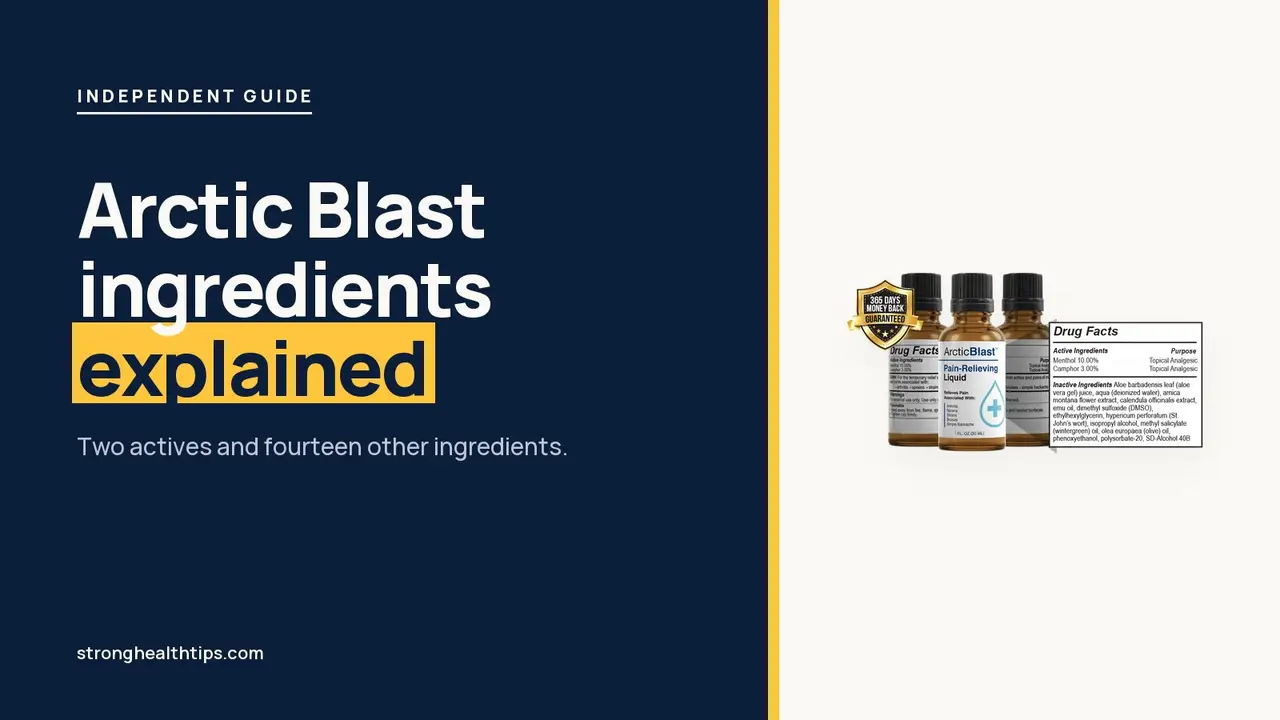
The Arctic Blast ingredients list has two halves on its Drug Facts box. The first half contains a pair of actives printed with strengths: 10.00% menthol and 3.00% camphor. The second names fourteen more substances with no quantities at all. Both halves are covered here: the names are sorted into families, and the few entries that need a pharmacist’s or physician’s review before first use are flagged.
Panel first
Two printed percentages, then the full name list.
Check the label on your bottle against this guide before picking a count.
Match the label to my packageArctic Blast ingredients: the two actives
- 10.00% menthol. Classified as a topical analgesic on the panel. It is often described as producing a cooling sensation on the skin.
- 3.00% camphor. Also classified as a topical analgesic. A waxy solid with a strong, sharp aroma.
No other strengths are listed, so these two entries carry the only figures attached to actives.
Fourteen other names, sorted by family
Amounts are absent from this group. The headings below are ours, while the names are copied from the label.
Botanical extracts and juice: aloe leaf juice (listed as aloe vera gel), arnica flower extract, calendula extract and St. John’s wort (listed as hypericum perforatum), discussed below.
Fats and oils: emu oil, olive oil and wintergreen oil (methyl salicylate), the last belonging to the salicylate group.
Alcohols: isopropyl alcohol and SD-Alcohol 40B, an ethanol denatured to be undrinkable.
Solvent, carrier and water: dimethyl sulfoxide, listed with the other ingredients though the seller calls it the carrier, with no percentage shown; plus aqua, the water base.
Preservatives and blending agents: ethylhexylglycerin, a preservative booster; phenoxyethanol, a preservative; and polysorbate-20, an emulsifier.
Every entry describes what kind of substance it is, not what it does for you.
Reading the label without guesswork
The panel divides neatly. The actives come first, each with a strength and a purpose. The other ingredients follow as a plain list. Net contents appear separately at the foot of the box. Without amounts, proportions cannot be compared, so the sensible reading is the one the panel allows: two strengths printed, fourteen names listed. Anything beyond that belongs in a conversation with the seller.
Matching the printed panel to your bottle
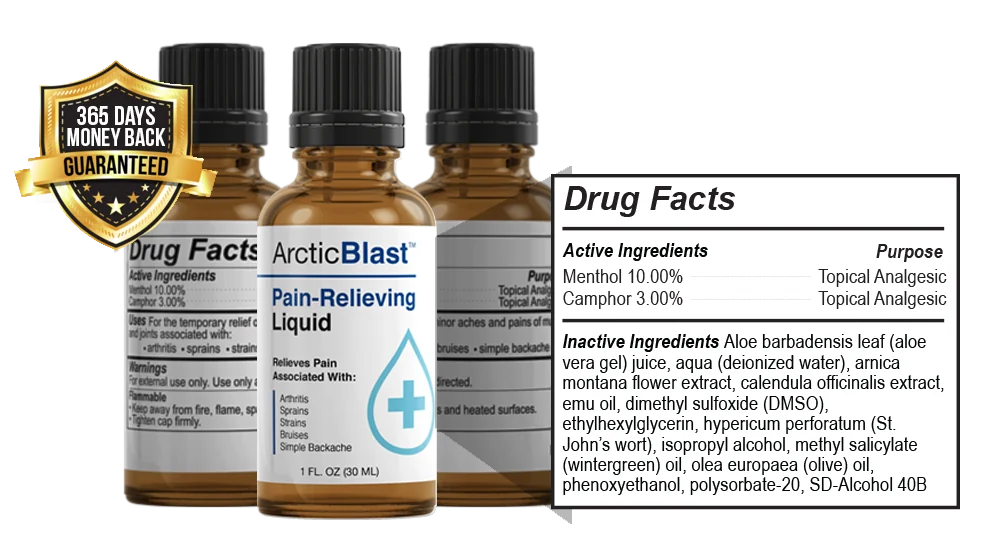
Hold the bottle in good light and work downward:
- Find the actives first and confirm 10.00% and 3.00%.
- Count the fourteen unquantified names beneath them.
- Read the net contents, 1 FL. OZ (30 ML), and the front wording.
- If anything disagrees with this page, pause and ask the seller before applying the liquid.
Entries that call for extra care
- Methyl salicylate (wintergreen) oil. A member of the salicylate group. People who react to aspirin or salicylates, or who take a blood thinner, need a pharmacist’s or physician’s go-ahead before use.
- St. John’s wort. Known to interact with certain prescription drugs. Compare it with your current medication list through a pharmacist.
- DMSO. Known to carry other compounds across the skin. Apply it to clean skin, keep other creams away from that spot and steer clear of the eyes.
- The alcohols. Isopropyl alcohol and SD-Alcohol 40B make the liquid flammable. Keep it away from flames, sparks and heated surfaces, and tighten the cap after each use.
What the panel leaves unknown
Two strengths are printed, so the share taken up by everything else cannot be estimated. The panel also omits production details. Send those questions to support in writing before ordering, and compare any answers with the product hub, which places the panel beside the packages.
A doctor check before the first application
The intended audience is adults 18 and over. Before the first application, a physician should weigh in if you are expecting or breastfeeding, rely on a prescription, live with an ongoing medical problem or have had a bad response to aspirin or salicylates. Existing prescriptions stand unless a clinician changes them.
If puffiness lingers, warmth or redness spreads, a fever appears, numbness or weakness sets in, an injury leaves you sore, or discomfort starts disturbing your sleep, book a clinician rather than reapplying.
Two actives, fourteen names
Begin with six bottles once the panel passes your check.
Six bottles total $234, at $39 apiece, with three digital bonus reports included.
Take the six-bottle rate with the panel checkedWhere to find the rest of the detail
The Arctic Blast hub combines the panel with package pricing and refund terms. The catalog ingredients page presents the same names in condensed form. For warnings in more depth, read the side effects guide, and for what each count costs, the price guide.
Choose a count
One bottle lets you verify the panel before committing.
Three bottles total $147 at $49 apiece; six total $234 at $39 apiece.
Verify the panel on one bottleQuestions for a pharmacist
If you already take medication, bring these to a pharmacist before using the liquid. Does St. John’s wort conflict with anything on your list? Does the methyl salicylate matter given any history with aspirin? How should DMSO influence the use of any other topical product? Never stack products without that advice.
A full year
Twelve months gives you room to judge the liquid for yourself.
Keep the order confirmation, since its date starts the refund window.
Begin my year with this labelWho the panel is written for
The label’s use statement reads for the temporary relief of minor aches and pains of muscles and joints, per the Drug Facts label. The intended audience is adult, and the panel is the document to read before you decide anything. Use the panel as the starting point for every later question, from the amounts printed for the two actives to the cautions that follow from the other names.
A short glossary of the panel’s terms
- Drug Facts box. The standard panel for over-the-counter products, listing the actives first, then the other ingredients and the net contents.
- Active ingredient. The ingredient the panel names as doing the stated job, here with a figure printed beside it.
- Other ingredients. Everything else in the formula, such as carriers, solvents, preservatives and blending agents. On this panel they carry no amounts.
- Topical analgesic. The label’s category for a product applied to the skin for minor aches and pains.
- Carrier. A substance that helps another ingredient spread across the skin. The seller uses this word for DMSO.
- Denatured alcohol. Ethanol with an added agent that makes it unfit for drinking, which is why SD-Alcohol 40B appears on the list.
- Emulsifier. An ingredient that helps oil and water mix into a stable blend.
Why a percentage is not a promise
A percentage tells you how much of an active is in the formula. It does not tell you how the liquid will feel on your skin, how quickly any sensation arrives or whether it suits your routine. Two products with the same percentage can differ in their other ingredients, their containers and their directions. Use the panel to confirm what is inside, then use a patch test to learn how your own skin responds.
Planning around the alcohols and the wintergreen oil
Both the alcohols and the wintergreen oil shape how you store and apply the liquid. Keep the bottle away from open flame, sparks and hot surfaces, and tighten the cap after each use. If you are sensitive to salicylates, write down every product you already use, because wintergreen and other salicylate-containing products can overlap. A pharmacist can help you map that overlap before you begin.
A patch test, written down
Choose a small area away from the sore spot, apply a little of the liquid and note the time. Look at the area again after a while and record what you notice in plain words. If the area stings, reddens or irritates, stop, and talk with a pharmacist or physician before going further. A written note gives your clinician something concrete to work from.
What to bring to a pharmacist
Bring the bottle, a clear photo of the Drug Facts box, a list of your current medicines and any past reactions to aspirin, salicylates or other topical products. Those four items let a pharmacist answer the practical questions quickly: whether an ingredient conflicts with something you take, whether the wintergreen oil needs extra caution for you and whether the carrier changes how other products should be used on the same area.
Reading the list in label order
The label lists the other ingredients in the order printed, and this page has grouped them by family for clarity. If you want to check your bottle line by line, use the label order, since it matches the panel you see. Going back and forth between the two lists is a quick way to confirm that nothing has been added, dropped or renamed.
Good to know
- Compare the printed panel with the bottle in your hand before the first dab, then try a patch on a small area. Expecting or breastfeeding readers, people using prescription drugs and those with an ongoing medical problem should run it past a physician beforehand; prescribed medicines carry on as directed.
Questions people ask
Which ingredients show a percentage?
Menthol, at 10.00%, and camphor, at 3.00%. Both are listed as topical analgesics on the panel.
Does the panel rank the other fourteen?
It does not. Amounts are missing, so no ranking by strength is possible. Our grouping follows the family each ingredient belongs to.
Where is DMSO on the panel?
In the other-ingredients group rather than with the actives. The seller's pages describe it as the carrier, and no percentage appears.
What does methyl salicylate mean for me?
It is wintergreen oil, a salicylate. People who react to aspirin or salicylates should check with a pharmacist first.
Why does St. John's wort get a warning?
The plant is known to interact with certain prescription drugs, so compare it with your current list through a pharmacist.
Can I put it on top of another topical?
Keep other creams and products away from the same patch of skin. DMSO can move other compounds through the skin, so ask a pharmacist before layering anything.
Not medical advice. This guide is general information and does not replace a consultation with a qualified healthcare professional who knows your history. Full disclaimer.
Written by
Strong Health Tips Editorial Team
We research, write and fact-check every guide against current guidance from major health bodies and peer-reviewed studies, then rewrite it in plain English. How we work.