What Is Energy Revolution System? The PDF Guide Explained Step by Step
What is Energy Revolution System? A PDF guide that the seller says shows how to build a small home power device, with a quick-start guide. What to know first.
- Author
- Strong Health Tips Editorial Team
- Published
- Updated
- Reading time
- 7 min read
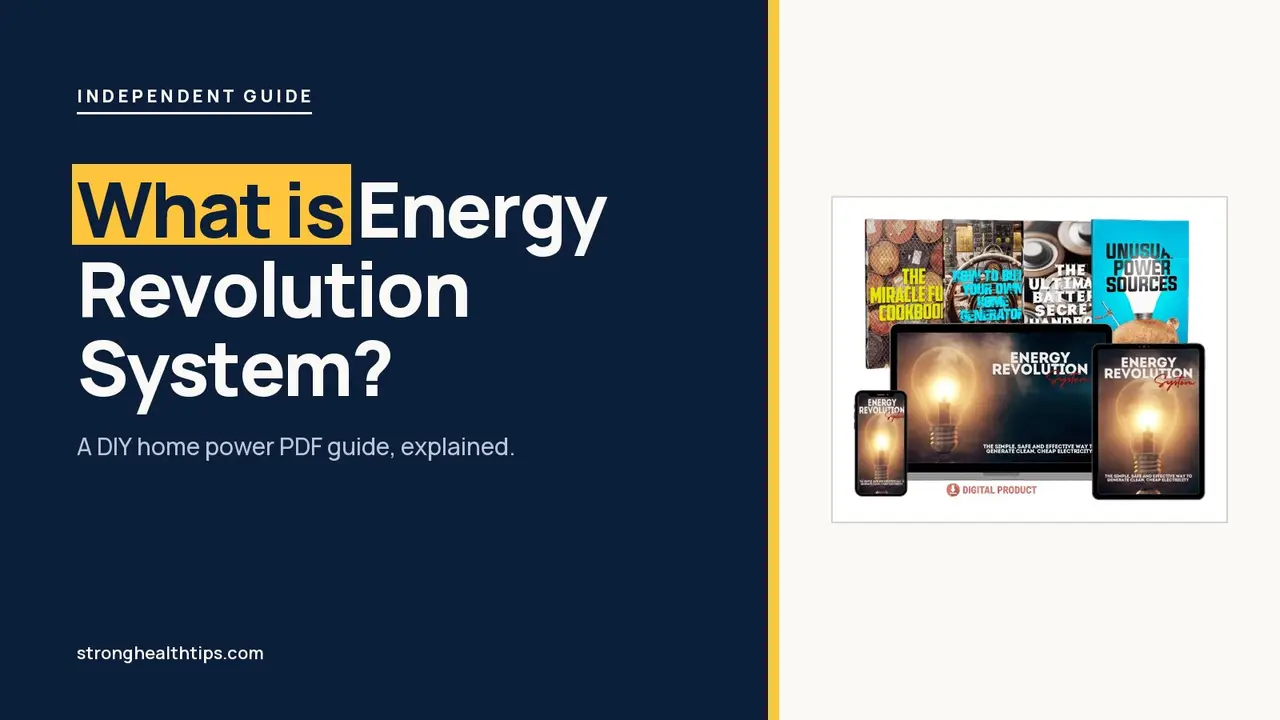
Seen the name in a search result and unsure what it refers to? Put simply, it is a PDF guide that you read on your own screen. The seller presents it as a route to building a small home power device. The price is $39 in a single charge, and because nothing is posted, the file reaches you through a link in an email. The sections below set out each part as the seller describes it, note what the sales page omits and suggest questions worth asking before you order.
The product in brief
A PDF guide, delivered by link
$39 in one payment, and nothing ships to your door.
Open the PDF orderWhat is Energy Revolution System, in plain terms
As a product, it is a document rather than a machine. The sales page presents the material as instructions for a compact home power build that a hobbyist could work through in stages. Those descriptions belong to the seller, and this page treats them as claims rather than verified facts.
What you own after checkout is a file you open on a computer, tablet or phone. No machine, kit or component is part of the order. That distinction matters, because a guide can explain a project clearly and still leave the shopping, fitting and wiring to you. Everything in the sections below follows from that one fact: the product is information, and the physical work sits on your side of the table.
What the download holds, as the seller describes it
Inside the download you will find three categories. An opening section comes first and, in the seller’s telling, begins without presuming earlier experience. A materials list follows. Four bonus guides complete the set, and the sales page names them by title only. Contents, parts and cost are not spelled out on that sales page, so the file is where that detail sits.
- A PDF guide to a small home power device, as the seller presents the project.
- An opening section for newcomers, which the seller describes as one that does not assume prior skills.
- A materials list that shows the categories of item the project calls for.
- Four bonus guides, listed by title in the bonuses post.
Read the list as a map of the download rather than as proof of what each section teaches. The titles and the seller’s descriptions tell you where to look. Only the opened file tells you how deep each section goes.
How a reader would use the guide
Picture a shed owner with one outlet near the door who wants to understand the idea before calling anyone. A workable sequence starts with the opening section, moves to the materials list and ends with local pricing for each item. That sequence turns a long file into a checklist. It also gives you time to find out whether the project needs a permit, and whether any step touches house wiring, which belongs with a licensed electrician.
Someone with a garage workbench may move faster, because the hand tools and spare fasteners are already on hand. Even then, the materials list is a starting point for local research. It is not a single shopping order to place in one go, and prices change from one town to the next.
Begin with the opening section
Read the opening pages first
The seller describes the beginner section as the place to begin.
Review the $39 offerHow the guide fits into a home power plan
A plan for a small power device usually moves through the same stages. You learn the idea, list the parts, price them locally, confirm the rules and then settle whether to build at all. The guide sits at the front of that sequence. It is most useful before you buy anything, because it gives you vocabulary and a list to test your assumptions against.
It is least useful as a stand-in for the stages after it. A permit office asks about the installation you propose, not about the guide, and an electrician looks at the wiring that is actually in the wall, not the wiring drawn in a document. Keep that order in mind. Reading first costs little, and it can spare you a trip to the shop for parts that do not fit the plan. The hub page gives the same product summary in one place for comparison.
Read the seller’s disclaimer before you start
Before you start, note what the seller’s disclaimer covers. In its own words, the story and presentation are for promotional purposes. The product is labelled an experiment that was not technically assessed. Some home alterations, the disclaimer adds, may be unlawful where you live, which makes a call to your local authority worthwhile. The seller’s pages also disclose that the author’s name is a pen name and that certain scenes are acted out. Those points bear directly on what you can safely build.
Beyond that, the sales page omits what the guide contains, which parts it calls for and what those parts cost. We make no claim about the output a build could reach, and this post contains no figure of that sort.
Before you open the file: a short checklist
- Check that the confirmation message carries both the link and the order reference.
- Open the file in any PDF viewer on the gadget you will use for planning.
- Start at the first page of the opening section, and note any term you do not know.
- Go through the materials list and mark which items you already own.
- Look up the local rules on permits, wiring and fuel before you price anything that carries power.
The checklist is short on purpose. Each step makes the next one cheaper, because the notes you take early tell you which questions to ask later.
Strengths and limits, side by side
On the plus side, the arithmetic is short: $39 for one digital file. Delivery needs no postal wait, since a link in your inbox opens on a PC, Mac, tablet or phone. The opening section and the materials list both sit inside that one file, as the seller tells it.
The limits matter just as much. Parts, tools and permits remain your own costs, since the sales page leaves them unpriced. The guide is not hardware, so nothing physical arrives. Electrical and fuel tasks bring fire and shock hazards that no document removes, and a finished kit with a manufacturer’s warranty would give you a different kind of protection.
The balance between those points depends on the reader. A person with spare time, a workshop and a clear reason to learn the subject may find the strengths carry more weight. A person who needs a finished device by a set date will probably find the limits decisive. Neither reading is wrong, and the right answer is the one that fits your timetable and your local rules.
Clear guide, clear limits
A written plan for $39
Read the file, price your list, then plan the build.
Order the PDF guideIs the guide right for you?
A reader who wants a single written starting point, has a general interest in home power and is prepared to research rules and prices before buying anything may find the guide a sensible read. A reader who expects a finished device, a priced parts list or a plug-in product will be disappointed. Knowing that before you order is the most useful thing this page can offer.
A useful habit is to write down, before you open the file, what you expect it to contain. When the opening section and the materials list are read, compare your note with what the seller describes. Any gap between the two tells you what to ask the seller or a local professional, and it keeps the reading focused on your own project.
If that description fits, the order page is where the purchase happens. Compare its wording with this post first, and read the what’s included page for the download details. The hub page has the full product summary, and the price breakdown walks through the $39 line in order.
Good to know
Home power projects can start a fire or deliver an electric shock. Look up local codes and permits before you connect anything, and bring in a licensed electrician for any work linked to house wiring. Fuel-burning equipment belongs outdoors, never inside a room or a garage.
Ready to read
Start with the $39 guide
One charge of $39, delivery by link to your inbox, and refund terms for 60 days.
Open the $39 orderQuestions people ask
So what is Energy Revolution System in one sentence?
It is a digital PDF guide that, according to the seller, shows how to build a small home power device. It costs $39 in one payment.
Will a physical device arrive at my door?
No. Nothing is posted to you. The file reaches you by download link after checkout, and every physical part is bought by you.
Does the seller describe the quick-start guide as beginner-friendly?
The seller says it starts without assuming earlier experience. Read its opening pages yourself to see whether that matches your own starting point.
What is in the download besides the main guide?
A materials list and four bonus guides, which the seller lists by title. The sales page does not give the full contents, so the file is where you find the detail.
Who is this guide meant for?
A hobbyist curious about home power who wants a written plan to study first, and who will check local rules and bring in a licensed electrician for house wiring.
Is there a refund option?
Yes, a 60-day money-back guarantee, per the seller. You ask by emailing the seller's refund email address with your full name, order number and the subject Refund Request.
Please note. This guide is general information only, not professional, legal or safety advice. Follow local building, electrical and water rules, and use a licensed professional where the law or your safety calls for one. Prices, plans, bonuses and refund terms can change; the official order page is the final word. Full disclaimer.
Written by
Strong Health Tips Editorial Team
We research, write and fact-check every guide against current guidance from major health bodies and peer-reviewed studies, then rewrite it in plain English. How we work.