LeanBiome Ingredients Explained: Every Label Line and Its Dose
LeanBiome ingredients explained: nine probiotic species, a green tea phytosome, inulin, Sphaeranthus indicus and Garcinia mangostana, each with its label dose.
- Author
- Strong Health Tips Editorial Team
- Published
- Updated
- Reading time
- 7 min read
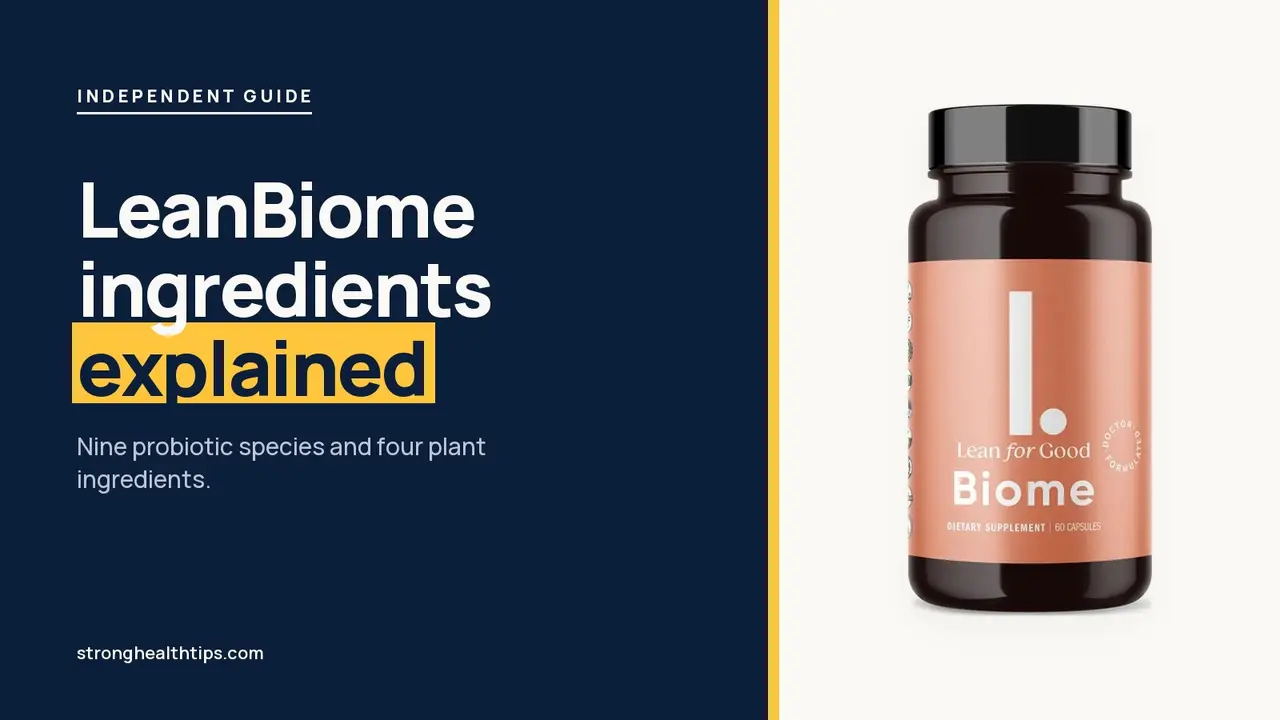
You would like to know what is in a capsule before you swallow it every morning, and with LeanBiome the label makes that easy. The LeanBiome ingredients come as nine probiotic species and four plant or fiber ingredients, and every line has a figure beside it. Below, each one is named, sized and explained in plain words. If the formula suits you, a 180-day guarantee gives you room to try the routine properly.
A label worth reading
Every line comes with a dose.
Try the formula with a long refund window behind your order.
Get my LeanBiomeEvery one of the LeanBiome ingredients at a glance
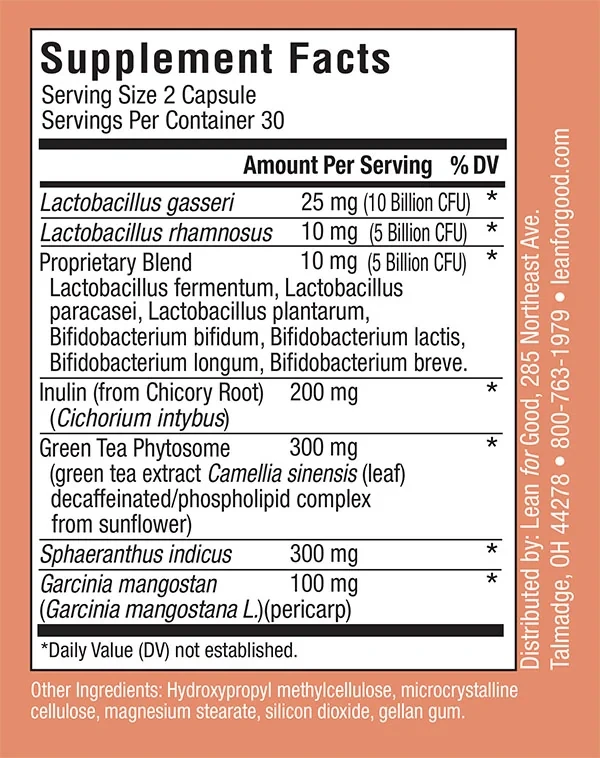
One serving means two capsules, so a bottle holds thirty of them. The amounts below belong to a single serving, listed from the largest to the smallest:
| Label line | What it is | Per serving |
|---|---|---|
| Lactobacillus gasseri | A probiotic species | 25 milligrams, 10 billion CFU |
| Lactobacillus rhamnosus | A probiotic species | 10 milligrams, 5 billion CFU |
| Seven-strain blend | Lactobacillus fermentum, paracasei and plantarum, plus Bifidobacterium bifidum, lactis, longum and breve | 10 milligrams, 5 billion CFU, shared by all seven |
| Inulin | A fiber from chicory root | 200 milligrams |
| Green tea phytosome | A leaf extract with the caffeine removed, joined to sunflower phospholipid | 300 milligrams |
| Sphaeranthus indicus | A plant ingredient | 300 milligrams |
| Garcinia mangostana | The pericarp (rind) of the mangosteen fruit | 100 milligrams |
No daily value is printed for any line. Because the blend’s seven strains split one figure, no single strain has a dose of its own.
The probiotic lines
Probiotics are live bacteria, and the label names nine species. Two have lines to themselves: L. gasseri at 25 milligrams (10 billion CFU) and L. rhamnosus at 10 milligrams (5 billion CFU). The remaining seven are grouped as a proprietary blend and share one entry, so the label gives the group 10 milligrams and 5 billion CFU. You will find the two genera in it, Lactobacillus and Bifidobacterium. CFU means colony-forming units, a count of live organisms. If you add the three printed CFU figures you reach 20 billion, our own sum and not a label claim.
The delayed-release capsule
On their way down, live bacteria meet stomach acid. The brand chose a delayed-release capsule, an acid-resistant shell that it says helps the bacteria arrive in the gut. As the design is part of the formula, swallow the capsules whole with water and leave them unopened.
Inulin
Inulin is a fiber found in chicory root, and the label lists it at 200 milligrams. Fibers like this are commonly added next to probiotics, and here the seller includes it as part of the same gut-focused formula.
The green tea phytosome
Alongside the species the brand uses Greenselect Phytosome, which pairs a decaffeinated green tea leaf extract with sunflower phospholipid. Phytosome is the brand’s word for a plant extract joined to phospholipid. At 300 milligrams it shares the top of the label with Sphaeranthus indicus, and since the tea is decaffeinated the label shows no caffeine from it.
Nine species, two capsules
See the whole formula for yourself.
Six bottles are $49 each, with US delivery covered.
See the LeanBiome packagesSphaeranthus indicus and the mangosteen rind
Two further plants complete the active list. Sphaeranthus indicus is listed at 300 milligrams a serving, and Garcinia mangostana, the outer rind of the mangosteen fruit, at 100. The brand credits the formula as a whole and not these two on their own, so we give neither an effect of its own.
What else goes into the capsule
The label closes with five carriers and fillers, namely two cellulose-based ingredients, magnesium stearate, silicon dioxide and gellan gum. The brand points to the vegan badge and says the capsule steers clear of gluten, dairy, egg, soy, nuts, crustaceans, GMOs and BPA. It adds that the product is lab-tested and comes from a US facility with FDA inspection and cGMP certification. Those are the brand’s statements. With an allergy, read the full panel on your bottle first.
How the seller fits it together
The aim, per the brand, is gut balance as one part of a weight plan. The pitch is teamwork: live species, a fiber, a decaffeinated tea extract and two plants in a capsule built to arrive intact. Read that as the maker’s idea for the formula, not a promise of results, and individual results vary. The label’s doctor formulated badge is the seller’s own wording.
Why amounts beside the lines matter
Plenty of supplement labels wrap everything into one proprietary figure, which leaves you guessing about what is in the capsule. LeanBiome gives you more to work with. Even where seven strains share one entry, the entry itself carries a weight and a CFU count, and every other line has its own. That lets you compare the capsule with anything else you take, or show the panel to a doctor or pharmacist and ask a precise question. A label you can discuss is easier to trust, and it is one reason we score this formula as we do. You can also see the same panel beside the three packages on the hub page.
Reading the label like a pro
- Start with the serving. Two capsules, 30 servings, 60 capsules per bottle.
- Check each line’s figure. Every line carries a dose, and the blend’s single figure covers seven strains.
- Note the unit. Milligrams measure weight, and CFU measures live organisms. Both appear on the probiotic lines.
- Read the other ingredients. They are the carriers and fillers.
- Finish with the directions. Two delayed-release capsules daily, or as your own provider advises.
Questions about specific lines
Is there caffeine? The label calls the green tea extract decaffeinated, and the brand calls it caffeine-free.
Why is CFU on only three lines? The probiotic figures are printed per line, and the seven-strain blend shares one. Together they make the 20 billion we add up.
Is it vegan? A vegan badge sits on the label, and the brand calls the capsule vegan-friendly.
Are there fillers? The five other ingredients listed above are carriers and fillers for the capsule, with no daily values.
Which part of the mangosteen is used? The rind, called the pericarp, according to the label. It does not say more, so neither do we.
Know what you take
A readable formula, backed for 180 days.
Take six bottles for the lowest bottle price.
Order my six-month supplyHow to take it
The directions: two capsules a day, taken with water and best in the morning, before you eat. A bottle lasts a month. The brand suggests 3 or 6 months of use because its cited research ran about 90 days. We promise no timeline for results.
When to see a doctor first
Per the label, three groups should see a physician before using this or any supplement: expectant or nursing mothers, minors and people with a diagnosed condition. The brand asks anyone on medication to do likewise. We would add people with weakened immunity, those on immune-suppressing medicine and anyone seriously ill, and we say to keep prescriptions going. A few people notice mild digestive changes at the start of a probiotic.
Good to know
- A weight change with no clear cause is for a doctor to look at, and your prescribed medicines stay in your day.
What the numbers add up to
Add up the printed weights and a serving holds 945 milligrams of listed ingredients: 45 from the three probiotic entries, 200 of inulin, 600 split between green tea phytosome and Sphaeranthus indicus, and 100 of mangosteen rind. That sum is our own arithmetic, not a label statement, and it leaves out the carriers and fillers. It gives a sense of scale: a compact capsule with an amount beside every line, which makes the label easy to compare with other products.
To see the formula in context, open the LeanBiome product page, which pictures every package, and for the cost of each box try the catalog price page.
Which package for which routine
Six bottles give the full six months at $49 each, about $1.63 a day, with US delivery covered and extras that include a 21-recipe smoothie eBook. A trio is $69 a bottle and a pair $79, each with $9.95 for US delivery. The price guide gives every figure, and the catalog ingredients page holds a shorter version of this label breakdown. Our review adds the verdict.
Start tomorrow’s routine
Ready to try the LeanBiome formula?
180 days to decide, counted from your order date.
Choose my LeanBiome packageQuestions people ask
What is in LeanBiome?
Nine probiotic species, inulin from chicory root, a decaffeinated green tea phytosome, Sphaeranthus indicus and Garcinia mangostana.
How many CFU does it contain?
The label lists 10 billion CFU for L. gasseri, 5 billion for L. rhamnosus and 5 billion for the seven-strain blend, which is 20 billion by our own addition.
Does each blend strain have its own dose?
No. The seven strains share a single figure, 10 milligrams and 5 billion CFU, for the blend as a whole.
Does the green tea part contain caffeine?
The label calls it a decaffeinated green tea leaf extract with sunflower phospholipid, and the seller describes it as caffeine-free.
What else is in the capsule?
Hydroxypropyl methylcellulose, microcrystalline cellulose, magnesium stearate, silicon dioxide and gellan gum.
Who should check with a doctor first?
The label names pregnant or nursing mothers, anyone under 18 and anyone with a known medical condition. We would add weakened immunity, immune-suppressing medicine and serious illness. Keep taking prescribed medicines.
Not medical advice. This guide is general information and does not replace a consultation with a qualified healthcare professional who knows your history. Full disclaimer.
Written by
Strong Health Tips Editorial Team
We research, write and fact-check every guide against current guidance from major health bodies and peer-reviewed studies, then rewrite it in plain English. How we work.